Vascular Lesions
Vascular lesions are relatively common abnormalities of the skin and underlying tissues, more commonly known as birthmarks. Although there are many types of vascular lesions, the most common are hemangiomas, vascular malformations, and pyogenic granulomas. Each type looks different, varies in terms of origin and requires different treatment.
Hemangiomas
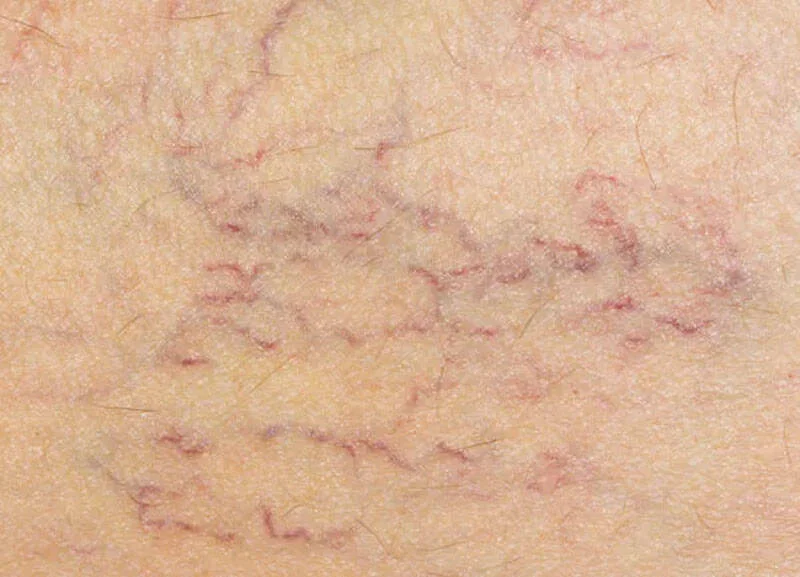
Hemangiomas are common growths of blood vessels found on your skin. These growths can appear anywhere on the body, especially on your face, chest and back, as red or purple lumps.
They may be present at birth, or become noticeable during infancy. Although hemangiomas are most common in infants and children, adults can develop them too.
Infantile hemangioma (strawberry hemangioma) is a common tumour of infancy. Infancy hemangiomas typically grow quickly and then shrink and fade.
Cherry hemangiomas are small, dot-like, raised red blood vessel growths often found on your torso. They’re very common in adults, especially as they age. Cherry hemangiomas usually form in groups of a few to dozens.
Hemangiomas are usually harmless. While many hemangiomas resolve on their own without treatment, some may require medical intervention due to their location, size, or complications. Hemangioma treatment varies based on factors like the size, location, and severity of the hemangioma, as well as the patient’s age and health.
Treatment of Hemangiomas
The treatment of hemangiomas depends on their characteristic life cycle and location.
Medication
Patients may be placed on medications. Beta-blockers, such as propranolol, are widely used to treat hemangiomas. The oral form works by narrowing the blood vessels in the hemangioma and reducing blood flow, which leads to the shrinking of the growth. In smaller or more superficial hemangiomas, a topical beta-blocker (such as timolol) may be applied directly to the lesion.
Before beta-blockers became the standard of care, corticosteroids were widely used to treat hemangiomas. Oral or injected corticosteroids like prednisone are still sometimes used in cases where beta-blockers are ineffective or contraindicated. They work by reducing inflammation and slowing the growth of the blood vessels within the hemangioma.
Medications can be effective but have some side effects that make careful patient selection and monitoring important.
Surgery
The surgical treatment of hemangiomas must carefully balance the need for early treatment with the scarring that will be created by the procedure. Surgical removal of a hemangioma is typically reserved for cases where the hemangioma is causing functional issues (e.g., obstructing vision or airway), is bleeding or ulcerating severely, or is unlikely to regress on its own. This method is often used when the hemangioma has reached a size or location that is not responsive to other treatments.
Laser Therapy
Laser therapy can be used to treat ulcerated lesions, as well as any residual blood vessels or discolouration that may remain after involution.
The laser works by targeting the blood vessels within the hemangioma, causing them to collapse and fade over time. Laser therapy can effectively reduce the redness and size of superficial hemangiomas, especially in the early stages of growth. Multiple treatments may be required for optimal results.
The recovery time is minimal, with some patients experiencing mild redness, swelling, or bruising at the treatment site for a few days post-procedure.
Vascular Malformations
Vascular malformations represent a group of congenital errors in the formation of vessels. They are classified based on the type of vessel that comprises the lesion and the speed of blood flow occurring within them. Each type has its distinct characteristics and the treatment plan required.
Capillary Malformations
You may know them as birthmarks, stork bites, port wine stains, or salmon patches — splotches of discolouration on the surface of the skin. Capillary malformations are comprised of irregular capillaries and small veins running through the deeper layers of the skin.
Treatment of Capillary Malformations
This type of vascular lesion disappears as you grow. But if it’s still around in your teens or adulthood, laser therapy treatment is effective in making your capillary malformation disappear. Laser treatments help shut down the irregular vessels and fade the lesions. Laser therapy is most effective in treating lesions when they are lighter in colour. Early treatment can also help to prevent some of the skin texture changes by slowing the progression of the lesion.
Venous Malformations
These malformations consist of collections of vessels. They typically aren’t noticeable until they grow and look like soft masses underneath the surface of your skin. Some of these lesions are almost invisible, while others cause extreme cosmetic and even functional problems.
Treatment of Venous Malformations
Venous malformations treatment falls into two major categories: sclerotherapy and excision.
Sclerotherapy involves an injection that causes the blood vessels to clot and your malformation to fade. Sclerotherapy alone can be effective for some lesions but can have complications.
Excision – surgically removing the malformation – is necessary in some cases. Excision of venous malformations can be either alone or in combination with sclerotherapy. Major complications include bleeding, scarring, and injury to surrounding tissues.
Pyogenic granulomas
Pyogenic granulomas are benign, acquired vascular lesions of the skin that can form in response to local tissue injury. They appear as rapidly growing, red, and often ulcerating bumps or polyp-like masses that bleed easily when disturbed. When disturbed, it bleeds easily.
Treatment of Pyogenic Granulomas
They usually require treatment. Typically, conservative surgical intervention can treat this kind of lesion.
When you’re ready to get rid of your vascular lesions, book a consultation online to determine the best method and achieve optimal results with minimal side effects.
Please note that the individual results will vary depending on the individual and the targeted area. Any details provided here are general and should not replace professional consultation.