
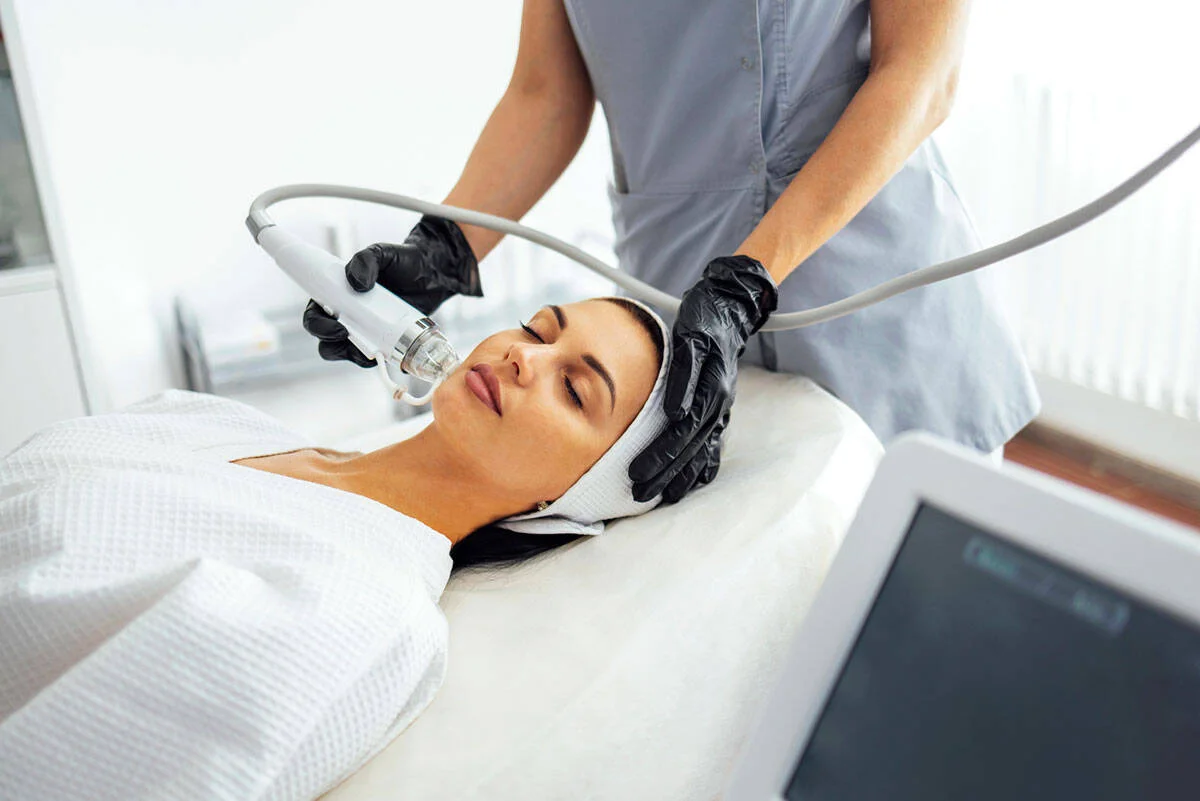
Radiofrequency Microneedling
RF microneedling combines the benefits of traditional microneedling with the radiofrequency (RF) energy. This dual-action approach offers deeper and more targeted rejuvenation.
In microneedling, fine needles create tiny, controlled injuries—or microchannels—on the skin’s surface. These micro-injuries stimulate the body’s natural healing process, encouraging the production of collagen, elastin, and capillaries. The result is improved skin texture, firmness, and elasticity.
Microneedling with RF energy delivers heat to the deeper layers of the skin. This enhances collagen remodelling, tightens tissue, and addresses more profound skin concerns, such as wrinkles, scars, and laxity, with greater precision. The combined effect makes RF microneedling a powerful tool for comprehensive skin renewal.
Overall, RF microneedling can help eliminate fine lines and improve wrinkles, stretch marks, acne scars, large pores, hyperhidrosis, surgery scars, and sun damage pigmentation.
Does RF microneedling work?
Research shows that radiofrequency microneedling is highly effective in treating a variety of skin conditions. Studies highlight its ability to target deeper layers of the skin, providing noticeable improvements in both appearance and firmness while being safe for a wide range of skin types.
Acne scars, scars from injury or surgery: The heat from the radiofrequency-charged needles reduces scar prominence and makes the skin smoother and firmer.
Skin rejuvenation: The treatment enhances skin texture and tone by stimulating collagen production and tissue remodelling. It effectively reduces fine lines and wrinkles. The result is a smoother, firmer, and more youthful appearance.
Hyperhidrosis: RF microneedling by targeting and shrinking sweat glands can significantly reduce sweat production. In many cases, this provides a long-lasting or even permanent solution to this condition.
RF microneedling also can target:
- Non-inflamed to moderately inflamed acne
- Appearance of large pores
- Hyperpigmentation
- Rosacea
- Body contouring
- Cellulite
- Stretch marks
- Scar improvement (postacne, traumatic)
What are the benefits of RF microneedling?
RF microneedling offers several distinct advantages over other skin treatments, making it a preferred option for many individuals seeking skin rejuvenation and correction.
- Suitability for every skin type
- Ability to reach the subcutaneous skin layer
- Shorter downtime than CO2 laser treatment
- Longer duration of effects
- Better tolerated side effects
- Enhancement of skin hydration, texture, volume, and collagen content.
How to prepare for RF microneedling session?
Before undergoing radiofrequency microneedling, we recommend the following pre-treatment guidelines:
- Limit sun exposure: Protect your skin from the sun by avoiding tanning and applying sunscreen for at least two weeks prior to your treatment to minimise irritation.
- Stop using harsh products, for example, exfoliating products, retinoids, and other strong skincare treatments 3–5 days before your procedure to avoid skin sensitivity.
- Hydrate well: Drink plenty of water in the days leading up to your treatment to keep your skin hydrated.
- Avoid blood thinners: Discontinue blood-thinning medications for a week before your session, unless advised otherwise by your practitioner.
- Clean skin: Arrive with a fresh, makeup-free face to ensure the skin is ready for the treatment.
What’s the radiofrequency microneedling procedure like?
The first step is a consultation – thorough medical history and expectations to ensure RF microneedling is suitable for the patient and to determine the best technique for the condition.
A typical procedure involves cleaning the skin to avoid infection, applying a local anesthetic, using a microneedling device that makes tiny wounds in the skin, cleaning the skin again, and applying a vitamin-enriched moisturiser. Topical antibiotics may also be used to prevent skin infections, if necessary.
The session can take up to an hour, depending on the problem area size.
What are the recovery tips?
To ensure a smooth recovery after RF microneedling, consider these helpful tips:
- Stay hydrated: Drink plenty of water to keep your skin hydrated and support the healing process. Well-hydrated skin heals faster and looks better.
- Sun protection: Your skin will be more sensitive to the sun after the procedure, so it’s essential to apply broad-spectrum sunscreen and avoid direct sun exposure to prevent pigmentation changes.
- Follow post-treatment instructions to ensure optimal healing and the best results from the treatment.
- Use recommended products: Use gentle, soothing skincare products recommended by your practitioner to aid in recovery and avoid irritation.
- Avoid makeup for 24 hours. After this period, you can resume your normal makeup and skincare routine.
How long is the downtime after RF microneedling?
The downtime after RF microneedling is relatively minimal, especially when proper pre- and post-treatment care instructions are followed. The healing process can be divided into three main phases:
Initial aftereffects (0-2 days): Right after the procedure, patients typically experience mild-to-moderate discomfort, redness, and warmth, similar to the feeling of a slight sunburn. These effects generally subside within 24 to 48 hours, and most patients can return to their normal activities the following day.
Short-term recovery (3-10 days): During the first week, the treatment area may start to flake, dry out, and feel itchy as the skin heals. Mild swelling and bruising are possible but typically resolve within 3 to 10 days.
Long-term recovery (up to several weeks): By the second week, the skin’s outer layer is fully regenerated, and improvements in skin hydration and tone become noticeable. Collagen production begins at a slower pace but gradually accelerates, with the full benefits continuing to develop over the next several weeks.
Overall, while the downtime is relatively short, patients can expect gradual, long-term improvements as collagen production continues.
When to expect results?
You may see results as early as the second week when the active healing period ends and the skin’s surface completely renews. However, due to continuous collagen strengthening and remodelling, the best results are typically achieved after three to six months.
How many RF microneedling sessions do I need?
The number of RF microneedling sessions required varies depending on the severity of the skin concern and how the skin responds to treatment. Some patients notice significant improvements after just 2-3 sessions, while others may require additional treatments for optimal results. Sessions are typically scheduled 4 to 6 weeks apart, allowing sufficient time for the skin to heal between treatments. To maintain the desired outcomes, a yearly touch-up session is often recommended. During your consultation, the medical practitioner will assess your skin and develop a personalised treatment plan tailored to your needs.
Who should avoid the treatment?
Radiofrequency microneedling is generally safe, but the following conditions can make the procedure unsafe for some people:
- Collagen vascular disorders
- Active infection
- Immunosuppression
- Inborn and acquired clotting problems
- History of poor wound healing
- Pregnancy
- Bad scarring history
- Poor blood sugar control
- Moderate to severe skin disease (like psoriasis)
- Chemotherapy or radiation therapy
- Taking anticoagulants
What are the possible side effects of RF Microneedling?
Typically, radiofrequency microneedling is well tolerated. The most frequent side effects of RF microneedling treatment are mild swelling, redness, and discomfort arising from normal inflammation. Bruising may occur in vulnerable individuals. These symptoms usually resolve even without treatment.
The risk of complications after RF microneedling is small. Possible side effects include:
- Dryness
- Scaling
- Itching
- Mild acne flare-up
- Cold sore breakout
- It may rarely lead to postinflammatory hyperpigmentation, but with adequate pre-procedure preparation this issue can be avoided.
- Track marks can sometimes be seen. These are temporary and tend to resolve on their own.
These side effects might last for a few hours or days.
Please inform your physician if you have taken any blood-thinning medication, as it may increase bleeding or bruising during and following the procedure.
Choosing a highly experienced medical practitioner to perform your procedure helps ensure the best outcomes.
Please note that the individual results will vary depending on the individual and the targeted area. Any details provided here are general and should not replace professional consultation.