Treatment of Hypertrophic Scars and Keloids
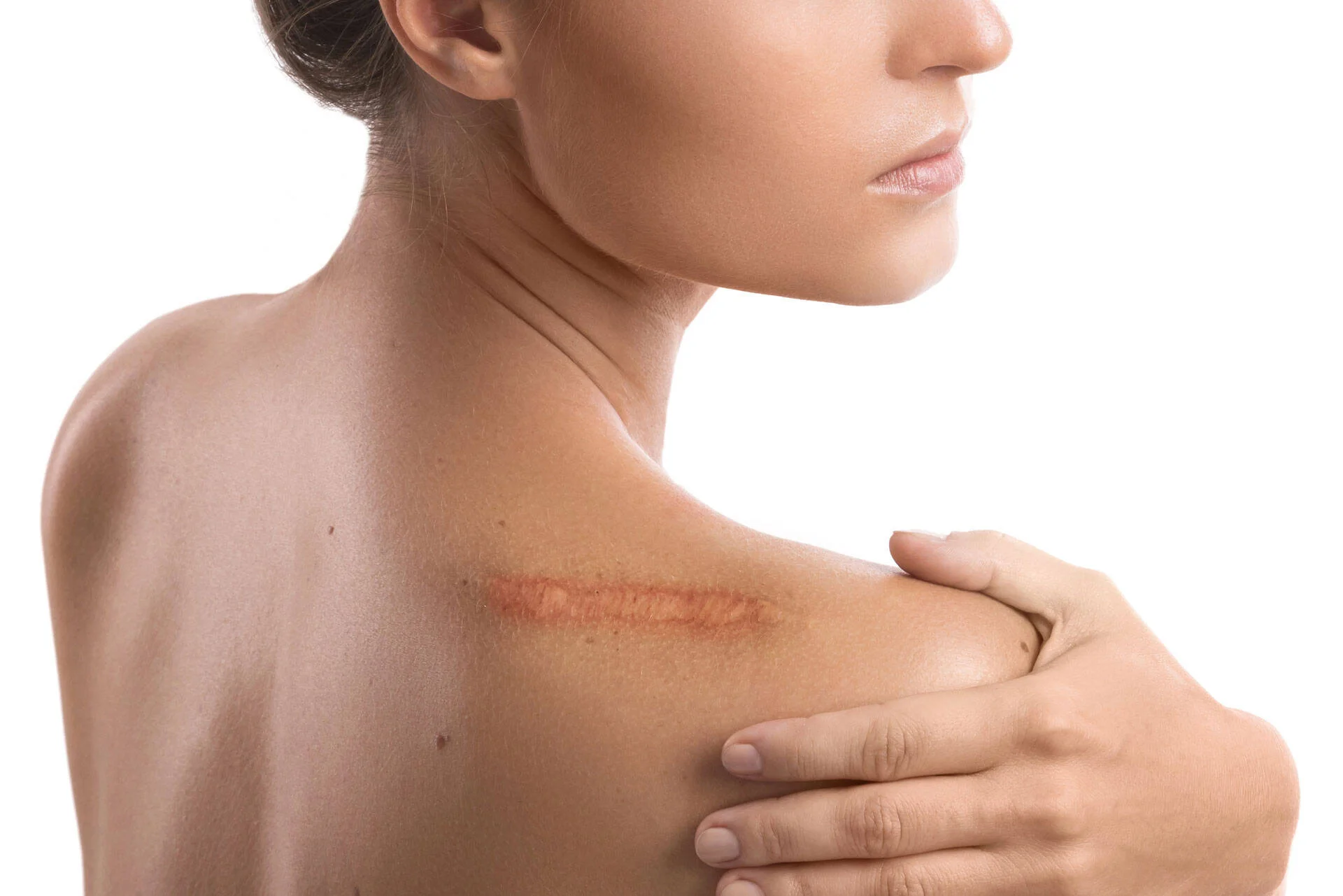
A hypertrophic scar is a thickened, often raised scar with a smooth or bumpy surface. It can occur during the wound-healing process when too much collagen is produced. Hypertrophic scars are similar to keloid scars, but are usually softer and do not extend beyond the original skin damage, maintaining the shape of the wound.
A keloid scar always grows and covers part of the area around the wound, has an uneven edge and shape, and hyperpigmentation is often observed.
Methods of treatment
Corticosteroid therapy is the first-line treatment for hypertrophic scars. Injections can significantly improve the condition of scars by smoothing them out. Treatment with corticosteroids requires several sessions, but the number of treatments performed is limited due to the possible effect on the tissue around the scar. Corticosteroids can often be combined with other methods, such as surgical excision or PRP with microneedling, to achieve the best results.
The surgical excision of the scar followed by closure with sutures can be carried out a year after formation. This stimulates tissue re-healing, and skin restoration and eliminates the underlying causes of scar formation, including possible inflammation.
In the case of newly formed scars, using a laser shows good results. The laser treatment helps to even out raised scars and can also target red and pink pigments to help lighten them. At Trinity Medical Aesthetics, we also use the Erbium Type (Er:YAG) laser to improve the appearance of scars.
Depending on the progress and response to therapy, our medically qualified practitioners select a combination of different methods.
Book a consultation at Trinity Medical Aesthetics Clinic in Kalgoorlie to receive personalized recommendations!